Excellence in Deceased Donations course
In February 2026, a few PALPRAC members had the privilege of attending the UCT Excellence in Deceased Donation Course. It was valuable to connect with colleagues committed to learning and, in doing so, strengthening donation practices within our healthcare system.
The interactive, two-day, in-person course covered the legal and ethical framework for decea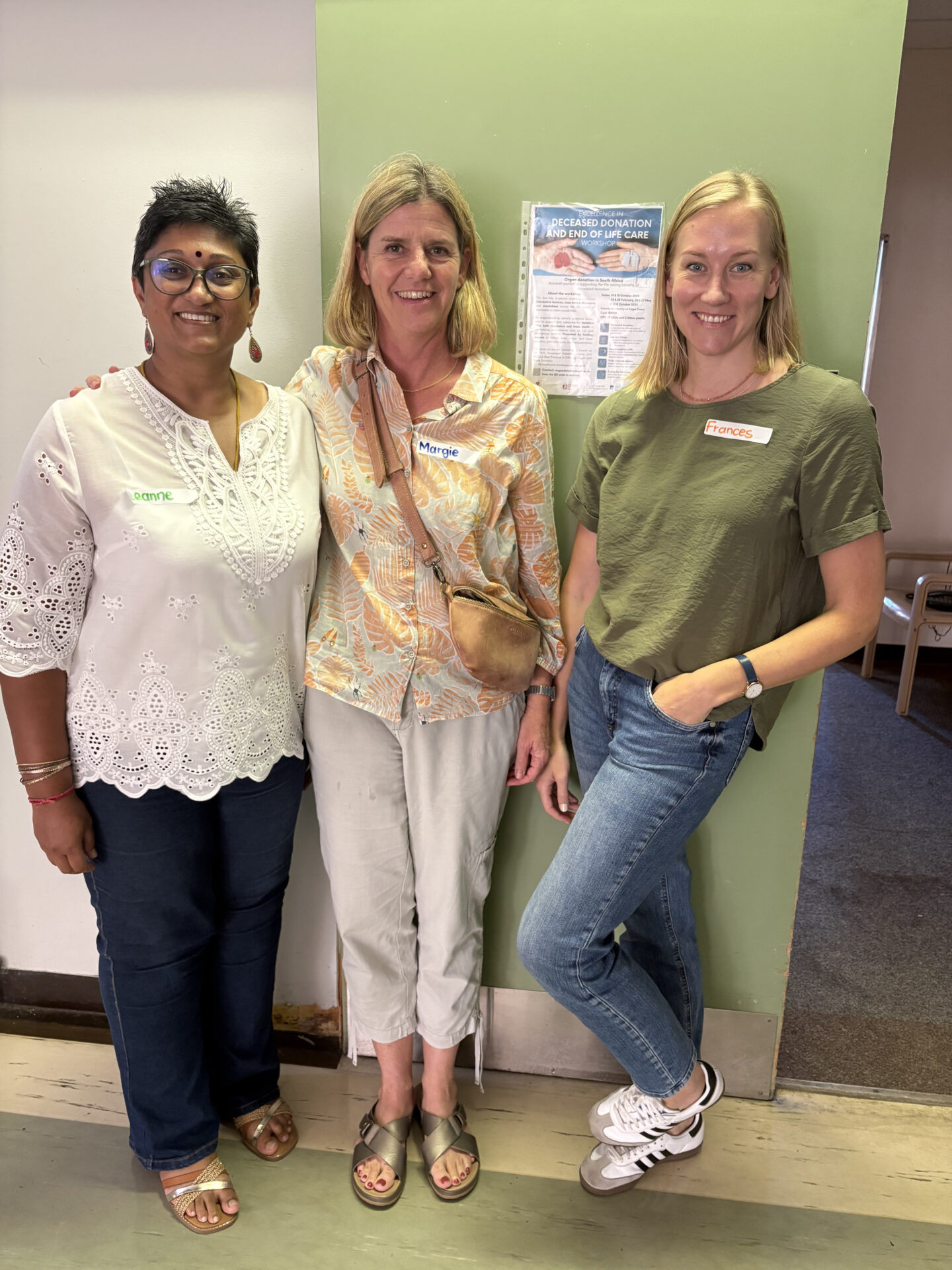 sed donation, donation pathways, the identification of potential donors, certification of death according to neurological or circulatory criteria, and communication skills for approaching families about organ and tissue donation.
A single deceased donor can benefit up to 60 people through tissue donation and seven through organ donation. In a context where donation rates remain low, there is a real opportunity for palliative care practitioners to contribute meaningfully as part of multidisciplinary teams.
Dr Frances Erasmus’s key takeaway was the GIVE acronym, which highlights clinical triggers for possible brain death. These include patients who have a Glasgow Coma Scale score below 5, are intubated and ventilated, and for whom end-of-life care is being considered.
Dr Leanne Reddy particularly valued the checklist used to assist with brain-death certification. It systematically guides clinicians through the required prerequisites and neurological examination, helping to ensure that the process is thorough and safe. The checklist aligns closely with the South African Guidelines on the Determination of Death (2021), which provide a comprehensive framework for certifying death according to neurological or circulatory criteria and can be read here.
The course will be offered again at UCT in May and October, and in Johannesburg in August. It is well worth attending.
For more information, email OrganDonation@uct.ac.za