It has been just over a year since the 2025 Palliative Care Conference brought palliative care practitioners together in Durban, South Africa, under the theme Revolution. Evolution. Solution. We recently reread the conference snapshot report, kindly compiled and shared by Mundipharma, and found it just as valuable to engage with now as it was then.
Our thanks to Mundipharma for capturing these workshops and presentations so thoughtfully, and for making this resource freely available to the palliative care community.
Practical, hands-on guidance from workshops covering nutrition, oral care, PEG tubes, pressure care and lymphoedema
Reflections on ethics, moral resilience and living wills for palliative care teams
Local and international perspectives, from compassionate communities in Kerala to Ubuntu and the Safari Concept in African palliative care
Updates on tools and support systems available to South African patients and practitioners, including telehealth, Alignd and Discovery Health’s Epilog
Whether you were there in person or are discovering these insights for the first time, we hope this snapshot sparks reflection on how far our community has come, and where it is headed next.
And speaking of what’s next: rumour has it that planning for the 2027 Palliative Care Conference is already quietly underway. Watch this space.
When you or someone you love is diagnosed with a serious illness, it’s natural to feel overwhelmed. You may have questions about what lies ahead, how symptoms will be managed, and where to turn for support. One of the most common myths about palliative care is that it is only for the last days of life. Palliative care is about living as well as possible for as long as possible.
Every person’s journey is unique, which is why palliative care is tailored to your needs. Your nurse is responsible for assessing and managing symptoms such as pain, breathlessness and nausea. This can be done at an inpatient facility and/or at your home as an outpatient. You and your family can be supported through education about medications and how to manage symptoms safely at home. Palliative care also recognises that families need support too. Your healthcare team will provide practical education about medications, symptom management and what to expect as your illness changes.
The main goal is to help patients remain comfortable and independent for as long as possible. The palliative care nurse works as a patient advocate, ensuring that patients understand their care in language that is easy to process. They identify and act on problems before they become emergencies. The nurse is also there to help you access community resources, with the assistance of members of the healthcare team, such as a social worker.
One experience has remained with me throughout my nursing career and continues to remind me why palliative care is so important.
I was asked to assess a patient who had been admitted to a high-care unit following complications from a serious illness. During my initial assessment, she was understandably withdrawn and reluctant to engage with me. I introduced myself and explained that my role was to assess her needs and help plan her transition from hospital to home through a nurse-led palliative home care programme.
She looked at me and quietly asked, “Can you promise me that I’m going home? I’m so tired of being in hospital.”
Her question stayed with me because, in that moment, it became clear that what she wanted most was not another medical procedure or another hospital stay. She simply wanted to return home, where she felt comfortable and was surrounded by the people she loved. I explained what her medical funder had approved and reassured her that, if it was clinically appropriate, our team would support her transition home. I also reassured her that she would not be alone and that ongoing guidance and support would be available to both her and her family throughout the process. She would receive ongoing support from me, together with a trained caregiver, ensuring that her symptoms were carefully managed while we maintained close communication with her treating healthcare team.
The nurse helps you through comprehensive symptom assessments, individualised care planning and support. The nurse also helps you navigate healthcare services, such as referrals to psychologists, social workers, occupational therapists, dietitians, spiritual care providers and hospice services when appropriate. Nurse-led models of palliative care can support patients’ needs, improve continuity of care within the health system and enhance the quality of life of patients with life-limiting illnesses such as cancer and end-stage diseases.
The aim of the palliative care nurse is to ensure that no patient or family feels alone while navigating a serious illness. Nurses are not there only for the patient; they also support families and caregivers by teaching practical caregiving skills and preparing them for the changes they can expect. Whether you have recently been diagnosed with a serious illness, are undergoing active treatment or are living with a chronic progressive condition, your palliative care nurse is here to provide expert guidance, compassionate care and ongoing support.
PALPRAC’s palliative care bursaries are helping to build the workforce South Africa needs. Building palliative care capacity means investing in the people who deliver it. Thanks to the generous support of our donor, PALPRAC has awarded a series of bursaries in 2026. Recipients come from areas with limited access to palliative care. Each one is positioned to lead advocacy and service development in their own community.
Nursing Scholarships: CCPN
For the first time, PALPRAC has extended formal scholarship support to nurses completing the APCC Certificate Course in Palliative Nursing. This year’s recipients are:
Sr Robyn Greyling (Gauteng, Zazen Respite Care). She hopes to expand access for patients without medical aid, and to mentor young nurses entering the field.
Sr Ruth Birtwhistle (KwaZulu-Natal, Othandweni Hospice). She brings over a decade of community health experience and is committed to mentoring colleagues in resource-constrained settings.
Postgraduate Diploma in Palliative Medicine: UCT
Three clinicians received partial scholarships this year, each paired with a structured mentorship programme. All three are strengthening services in under-resourced provinces:
Patrick Molelekwa (Northern Cape). He is working to expand sustainable palliative care services across the public health sector, despite the province’s vast distances.
Dr Jolene Arries (Western Cape). She is building a functional interdisciplinary team and embedding palliative care into everyday practice.
Dr Anne Armour (KwaZulu-Natal). She is growing paediatric palliative care and supporting district-level champions.
Applications Now Open: Social Work Bursary
Building on this momentum, PALPRAC has opened applications for the 2026 Social Work Palliative Care Bursary. Six partial bursaries of R3,000 are available, towards approved introductory or psychosocial courses. Applications close 31 October 2026. Early submission is encouraged.
Each of these bursaries reflects PALPRAC’s commitment to a strong, multidisciplinary palliative care workforce. Together, they reach further into the communities that need it most. Congratulations to all our recipients. To prospective social work applicants: we look forward to receiving your applications.
To learn more about palliative care training opportunities in South Africa, visit our Palliative Care Training page.
Dr Andrea Mendelsohn, a palliative care doctor working in the public sector, writes about South Africa’s public palliative care system failing a forthcoming World Health Organization audit, and what genuine access to pain relief and family support could look like if that changed. The piece, written in her personal capacity, also touches on the ongoing legal debate around assisted dying, arguing that palliative care access should come first.
Bhekisisa’s Mia Malan speaks to Dr René Krause, who leads the palliative care unit at Groote Schuur Hospital, about the unit’s award-winning partnership with the hospital’s oncology team, common misconceptions around morphine, and what dignity means for patients facing serious illness.
Many people grew up with the stories of Christopher Robin and Winnie the Pooh. If you don’t know them, they are well worth reading, even as an adult. Pooh and his friends often have quirky and unexpected wisdom to share.
In one such story, Winnie the Pooh goes up in a balloon, covered in mud, hoping to deceive the bees into thinking he is a rain cloud so that he can reach the honey in their hive at the top of the tree. He disturbs the bees, who start fiercely buzzing around him. Pooh then asks Christopher Robin to open his umbrella and say, “Tut-tut, it looks like rain,” hoping this will add to his disguise and fool the bees.
So, when asked the question, “When do I need palliative care?”, my answer would be, when it
looks like rain. Palliative care is your umbrella.
Following this train of thought, “rain” might be the moment when the oncologist says, “Your cancer is serious. We are able to treat and control it for a period of time. We are hoping for the best.” That is often the time to start carrying a palliative care umbrella. You might not be able to fool the bees, but the umbrella can help protect you.
There are times when physical symptoms such as pain begin to affect your daily quality of life. At other times, the emotional toll on you and your loved ones becomes significant, and it can help to share this with a professional. You might be the type of person who prefers to take things day by day, hoping for the best, but there are almost always worries about the what-ifs. Talking these through and planning ahead can help settle them, knowing that there is a plan. As Winnie the Pooh would say: “When you are a bear with very little brain, things which seemed very Thingish inside you is quite different when it gets out into the open and has other people looking at it.”
While your oncology care team can certainly help with some of these aspects, it has become more commonplace for people to have access to a palliative care team. This team works alongside your oncology team and usually consists of a doctor, a nurse, and a social worker or counsellor. Sometimes there is also a need for a dietician, occupational therapist, speech therapist, or physiotherapist, as well as the involvement of a trusted spiritual advisor or someone from your faith or spiritual community. The support is tailored to your preferences and specific needs, in much the same way that your cancer treatment is tailored to your cancer.
I am reminded of an elderly gentleman diagnosed with prostate cancer. He had received hormonal treatment for many years and was now undergoing chemotherapy. The cancer had spread to his bones, causing significant pain and making it difficult for him to manage his day-to- day tasks or go for his daily walk. He also had low-grade nausea that affected his appetite, and his wife was worried about how little he was eating. She herself was not well, and together they were concerned about what might happen if he became sicker.
We were able to adjust his pain medication, creating a plan that suited his daily routine and allowed him to sleep through the night. With a change to his nausea medication, he was once again able to eat the meals prepared with love and watched closely by his wife, for whom every mouthful mattered. They also met with the social worker and together they began working on a plan B for if and when more care might be needed. Until then, they had not known what was available or whether they could afford it. Setting this plan in motion brought great relief, not only to them but also to their children.
A week later, the hospice nurse did a home visit. She checked in on his symptoms, reinforced the medication plan, and spent time with both of them, answering questions that had surfaced since our last visit. She helped them think through practicalities, who to call when and what to watch out for.
As the rain eased, they were able to get on with treatment and everyday life. They spoke about the sense of safety that came from knowing there was a team behind them and a number they could call. They were no longer carrying this alone.
So there is no single right time to need palliative care. In my experience, many people only realise in hindsight how helpful it might have been to have this extra layer of support earlier.
Of all the things people tell me affect their quality of life, fatigue and pain are the big ones.
Fatigue is tricky. As doctors, we often underestimate how much fatigue affects daily life. There is unfortunately nothing in a bottle that I can prescribe four times a day that will magically fix it. It usually takes creativity, adaptation and support to work around it.
Pain, however, is almost always treatable. Sometimes it takes one or two attempts to find the right “recipe,” but in most cases we can get it under control.
I have seen patients and families struggle with poorly managed pain, and the ripple effect is significant. Pain can take up the whole day. It leaves little space for anything else, never mind basic activities like getting dressed or getting into a car, let alone something enjoyable like a short walk. It affects appetite, mood and sleep. It affects relationships. Families can feel helpless, not knowing how to make things better.
Sometimes people say, “It’s not that bad, I can deal with it.” Or, like frogs in slowly warming water, they forget what a pain-free day feels like as the temperature rises so gradually.
Pain deserves attention. One of the most effective tools we have for treating cancer pain is opioids.
What are opioids?
Opioids are a group of strong pain medicines that are commonly used to treat moderate to severe cancer pain.
They work by attaching to specific receptors in the brain and spinal cord, reducing the way pain signals are processed and perceived.
Morphine, the best-known opioid, is derived from the opium poppy plant. Other opioids, such as fentanyl and methadone, are made synthetically in a laboratory. Some are semi-synthetic, meaning they are created by modifying natural substances.
How are opioids given?
There are many different forms:
Syrup, drops or tablets taken by mouth
Long-acting tablets taken twice daily
Patches that slowly release medicine through the skin
In some situations, medication is given intravenously or under the skin
The choice depends on the type of pain, what is available, and what suits the patient best.
Common worries about opioids
There are many myths and misconceptions about morphine and other opioids. Let’s address some of the most common ones.
“My pain is not bad enough for morphine.”
Sometimes a low dose of an opioid gives better, cleaner pain control than a mix of weaker medications.
“If I start now, there won’t be anything stronger later.”
Starting an opioid when you have pain does not make it ineffective later. The dose can always be adjusted if needed.
“I will become addicted.”
Addiction is not a concern when opioids are used under medical supervision for cancer pain. Using medication regularly to treat real, physical pain is not the same as addiction.
“I am allergic to morphine.”
True allergic reactions to opioids are very rare. Most people who believe they are allergic experienced side effects such as nausea or itchiness, or received a high dose after surgery and felt unwell. When we start opioids for cancer pain, we start low and increase slowly.
“Opioids are only for the end of life.”
Not true. Many people live well for years with cancer while using opioids to stay comfortable and active.
“I can’t use opioids because they cause constipation.”
It is true that all opioids cause constipation. Rather than avoiding good pain control, we manage constipation proactively and consistently.
Did you know?
Oral morphine is also prescribed to suppress cough and help ease shortness of breath. It is often much more effective than using oxygen!
What are the common side effects?
Like all medications, opioids have side effects. The good news is that most are manageable.
Nausea and vomiting
This often lasts only a few days after starting treatment. It can be prevented or treated effectively with anti-nausea medication.
Drowsiness
Feeling sleepy can happen when starting opioids or increasing the dose. It usually improves within a few days. Let your healthcare provider know if you feel very sedated or if the grogginess does not settle.
Constipation
This is the big one. Unlike nausea and drowsiness, constipation does not go away on its own. Most people need daily laxatives while taking opioids.
Other possible effects
Itchiness, difficulty passing urine, sweating and dry mouth.
Using opioids well: practical tips
Understand the possible side effects and be prepared. Use your laxatives. I cannot stress this enough.
Cancer pain is often constant or frequent. Taking your opioid regularly as prescribed, rather than waiting until pain becomes severe, gives much better control.
There are two main ways opioids are prescribed:
Short-acting opioids
For example, oral morphine syrup. These usually need to be taken every four hours because that is how long they last in the body.
Long-acting opioids
Such as long-acting morphine or oxycodone, taken every 12 hours. Patches also fall into this category. Depending on the type of patch, they are usually changed either every 3 days or every 7 days.
Ideally both are prescribed: a long-acting medication for steady background pain, and a short-acting medication for “breakthrough pain” (temporary spikes of pain despite regular treatment).
If you are using oral morphine syrup to manage steady background pain, your doctor will explain how much extra you can safely take for breakthrough pain. This is on top of your regular four-hourly doses.
If you need frequent breakthrough doses, your doctor will likely adjust your regular long-acting medication.
Keeping a simple pain diary can be very helpful. Note when you have pain, what you took, and how well it worked. And most importantly, tell your doctor or nurse if your pain is not controlled or if side effects are troublesome.
Pain control works best as a partnership. With regular, open communication and careful adjustments, most cancer pain can be managed well. When pain is well controlled, there are simply more good days, days where you can get through the to-do list and still have space for the want-to-do list.
Valuable resources
• Download the CANSA booklet tohelp Manage Cancer Patient’s Pain in the Home. (cansa.org.za)
• Using oral morphine and common myths (palprac.org)
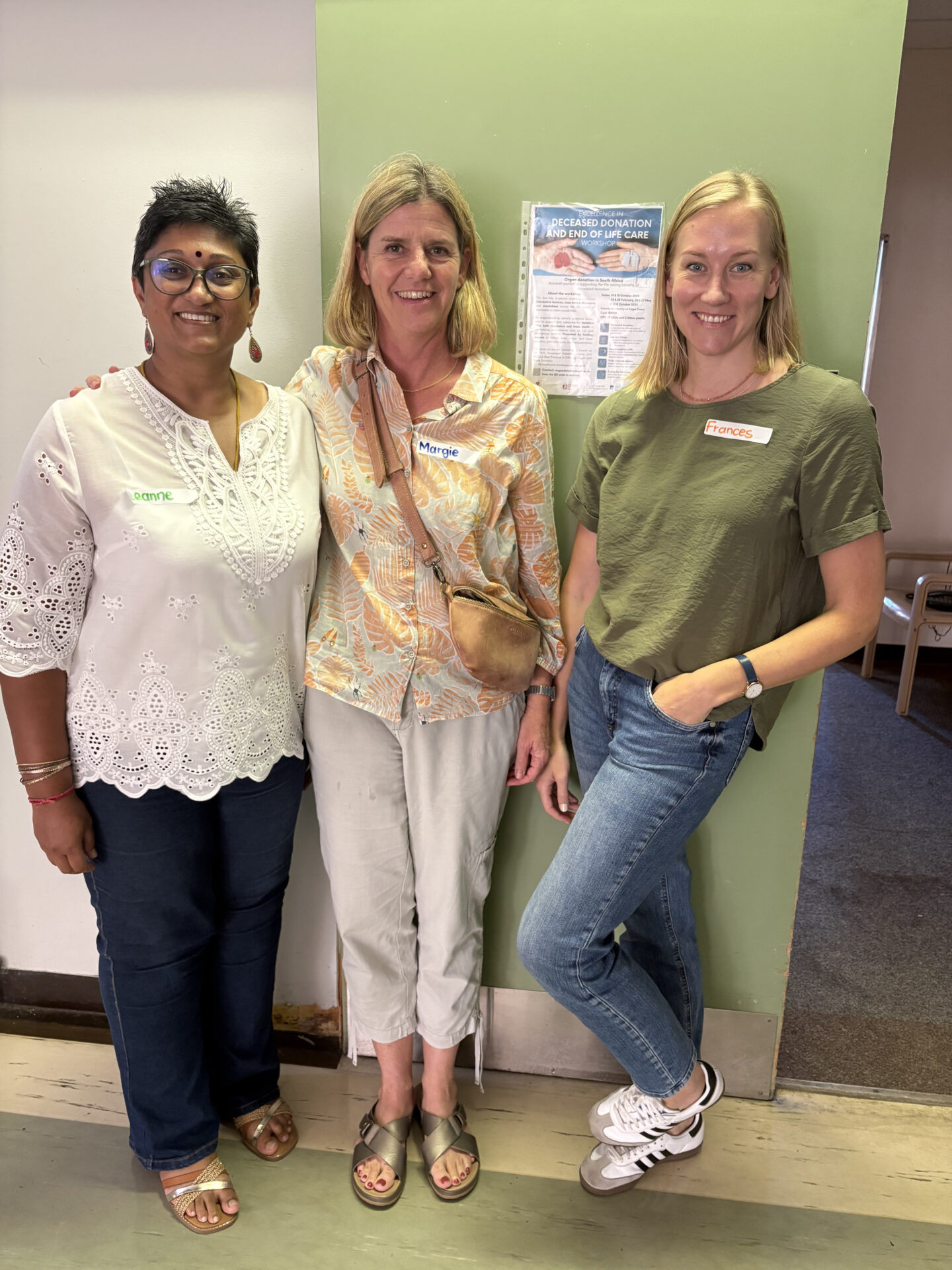
In February 2026, a few PALPRAC members had the privilege of attending the UCT Excellence in Deceased Donation Course. It was valuable to connect with colleagues committed to learning and, in doing so, strengthening donation practices within our healthcare system.
The interactive, two-day, in-person course covered the legal and ethical framework for deceased donation, donation pathways, the identification of potential donors, certification of death according to neurological or circulatory criteria, and communication skills for approaching families about organ and tissue donation.
A single deceased donor can benefit up to 60 people through tissue donation and seven through organ donation. In a context where donation rates remain low, there is a real opportunity for palliative care practitioners to contribute meaningfully as part of multidisciplinary teams.
Dr Frances Erasmus’s key takeaway was the GIVE acronym, which highlights clinical triggers for possible brain death. These include patients who have a Glasgow Coma Scale score below 5, are intubated and ventilated, and for whom end-of-life care is being considered.
Dr Leanne Reddy particularly valued the checklist used to assist with brain-death certification. It systematically guides clinicians through the required prerequisites and neurological examination, helping to ensure that the process is thorough and safe. The checklist aligns closely with the South African Guidelines on the Determination of Death (2021), which provide a comprehensive framework for certifying death according to neurological or circulatory criteria and can be read here.
The course will be offered again at UCT in May and October, and in Johannesburg in August. It is well worth attending.
When a loved one is living with a life-limiting illness, families often need to consider different palliative care and caregiving options, including care at home, professional caregivers, respite care and frail care. The choices can feel overwhelming, especially during an emotionally challenging time.
Understanding the available caregiving options can help families make informed decisions that prioritise comfort, dignity, quality of life, and the wellbeing of everyone involved. There is no single “right” approach to caregiving. Every person and every family is unique, and care should be tailored to meet their individual needs, wishes, and circumstances.
Palliative care at home
For many families, remaining at home is the preferred option. Being in familiar surroundings often brings a sense of comfort, security, and normalcy. Home-based care also enables family members to remain closely involved in their loved one’s day-to-day care while creating meaningful opportunities to spend quality time together. However, caring for someone with increasing physical or medical needs can become demanding, both emotionally and physically.
Employing a caregiver at home
As care needs increase, families may decide to employ a caregiver to provide additional support. Caregivers assist with personal care, mobility, medication management, and daily living activities, allowing family members to focus on spending meaningful time with their loved one rather than managing every aspect of their care. The cost of employing a caregiver varies depending on whether the individual is privately employed or sourced through a nursing agency, as well as the level of care required.
When frail care may be appropriate
When it is no longer possible to provide safe care at home, a frail care facility may become the most appropriate option. While this decision is sometimes accompanied by feelings of guilt and uncertainty, it is important to remember that choosing professional care can be an act of love. Frail care facilities provide 24-hour nursing support and specialised care for individuals with complex health needs. Costs generally range from R15,000 to R35,000 per month, depending on the facility, level of care required, and location.
Respite care for families and caregivers
Respite care is another invaluable resource families can use. It offers temporary support, allowing caregivers an opportunity to rest, attend to their own health, or simply recharge. Most South African medical aid schemes have palliative care benefits, with some offering respite care as part of their programmes. For example, Discovery provides two weeks of respite care every three months through their Advanced Illness Benefit (AIB). This benefit can be utilised through home nursing services or an admission to a dedicated respite care facility. The home nursing benefit is only paid for if accessed through a nursing agency that is registered with the medical aid.
Getting help to choose the right care
Every family’s journey is different, and no one should have to navigate it alone. A palliative social worker can help families explore the available care options, understand the emotional, practical, and financial implications of each, and develop an individualised care plan that reflects the unique needs and values of both the patient and their family.
Though death is a painful reality we instinctively avoid, delaying preparation and planning can rob us of control and clarity when facing uncertainty. Avoidance may feel protective, but in fact, avoiding these important matters can inadvertently cause more harm than addressing them head-on. Thoughtful planning can provide some clarity and peace while also easing the transition for the family after the patient has passed.
Why is end-of-life planning important?
Failing to plan for end-of-life can lead to significant challenges for both the patient and their loved ones. Below are the potential consequences of not planning, along with how proactive preparation can help prevent them.
Loss of control over final wishes:
Without documented preferences, decisions regarding medical care, burial, cremation, or memorial services as well as other important decisions may be left to others, increasing the risk of choices that do not align with your values. Planning ensures that your personal preferences are clearly outlined, allowing your wishes to be honoured.
Uncertainty in medical care:
Without advance healthcare directives, medical professionals may have to make critical decisions without clear guidance, potentially resulting in unwanted treatments. Additionally, loved ones may be placed in the difficult position of making medical choices on your behalf, carrying a significant emotional burden. Establishing medical directives enables you to specify treatment preferences, ensuring that healthcare providers follow your instructions and alleviating uncertainty and distress for your loved ones.
Legal and financial implications:
The absence of a will or estate plan can result in assets being distributed based on default legal processes, which may not reflect your wishes. Additionally, unexpected medical expenses, long-term care costs, and funeral arrangements can place a heavy financial strain on families. Proper estate and financial planning ensures that assets are managed according to your preferences and minimises financial burdens for loved ones.
Family conflict:
Too often I have witnessed disagreements over care responsibilities, financial matters, and inheritance because instructions are unclear. Planning reduces the risk of misunderstandings, promoting unity and preventing disputes among family members.
Unresolved grief:
When loved ones are left to navigate end-of-life decisions without clear guidance, uncertainty and doubt can deepen their grief. Questions like “Did I make the right choice?” or “Is this what they would have wanted?” can weigh heavily, leading to emotional distress long after their loss. Thoughtful planning provides clarity and reassurance, allowing families to focus on healing rather than unanswered questions.
When does one start end-of-life planning?
Start now! It is never too early, but it can often be too late! Planning means preparing in advance – not reacting in a time of crisis.
Where does one start?
End-of-life planning can feel overwhelming but breaking it down into manageable steps makes it more approachable. Below are a few basic guidelines to help you get started.
Start by clarifying your priorities, ensuring that your medical care, financial security, and family harmony align with your values.
Gather and prepare essential documents such as an advance healthcare directive, Will, and power of attorney to protect your wishes legally.
Identify loved ones who can help you plan and those with whom you will share your information.
Discuss your planning concerns and needs with your healthcare provider or care team – they can offer guidance and support as you navigate this important process.
If you feel too ill or overwhelmed to handle the planning, delegate tasks to trusted individuals to manage different aspects of the process. Ensure they have your best interests at heart and always review and verify their decisions.
Use an existing checklist as a guide or create your own with your loved ones.
Whatever approach you choose, commit to it and take action. Planning ahead allows you to spend more time cherishing the moments that matter most. Thoughtful preparation leaves behind more than just legal documents – it creates a lasting legacy of clarity and care, offering peace of mind for both the present and the future.
This website uses cookies to improve your experience while you navigate through the website. Out of these, the cookies that are categorized as necessary are stored on your browser as they are essential for the working of basic functionalities of the website. We also use third-party cookies that help us analyze and understand how you use this website. These cookies will be stored in your browser only with your consent. You also have the option to opt-out of these cookies. But opting out of some of these cookies may affect your browsing experience.
Necessary cookies are absolutely essential for the website to function properly. These cookies ensure basic functionalities and security features of the website, anonymously.
Cookie
Duration
Description
cookielawinfo-checkbox-analytics
11 months
This cookie is set by GDPR Cookie Consent plugin. The cookie is used to store the user consent for the cookies in the category "Analytics".
cookielawinfo-checkbox-functional
11 months
The cookie is set by GDPR cookie consent to record the user consent for the cookies in the category "Functional".
cookielawinfo-checkbox-necessary
11 months
This cookie is set by GDPR Cookie Consent plugin. The cookies is used to store the user consent for the cookies in the category "Necessary".
cookielawinfo-checkbox-others
11 months
This cookie is set by GDPR Cookie Consent plugin. The cookie is used to store the user consent for the cookies in the category "Other.
cookielawinfo-checkbox-performance
11 months
This cookie is set by GDPR Cookie Consent plugin. The cookie is used to store the user consent for the cookies in the category "Performance".
viewed_cookie_policy
11 months
The cookie is set by the GDPR Cookie Consent plugin and is used to store whether or not user has consented to the use of cookies. It does not store any personal data.
Functional cookies help to perform certain functionalities like sharing the content of the website on social media platforms, collect feedbacks, and other third-party features.
Performance cookies are used to understand and analyze the key performance indexes of the website which helps in delivering a better user experience for the visitors.
Analytical cookies are used to understand how visitors interact with the website. These cookies help provide information on metrics the number of visitors, bounce rate, traffic source, etc.
Advertisement cookies are used to provide visitors with relevant ads and marketing campaigns. These cookies track visitors across websites and collect information to provide customized ads.